The Calendar Is Not a Strategy: When Reporting Rituals Substitute for Real Progress
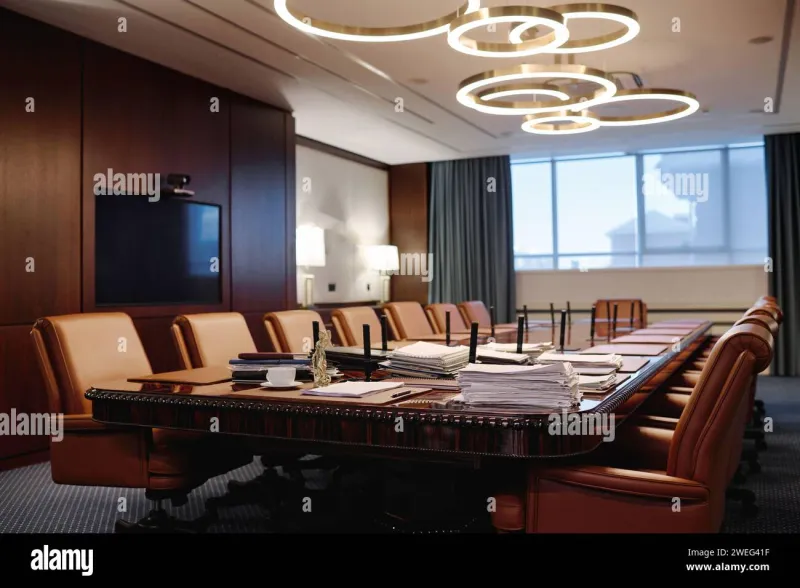
Photo: empty corporate boardroom with quarterly report documents on table, via c8.alamy.com
Every American corporation runs on a metronome. The quarter closes, the deck is built, the numbers are walked through, the next quarter's commitments are logged, and the cycle begins again. For most executive teams, this cadence feels like governance. In many organizations, it has quietly become a substitute for it.
The problem is not that quarterly reviews exist — disciplined cadence is essential to execution. The problem is that the ritual can complete itself successfully even when the strategy underneath it has not moved in years. The same three initiatives appear in the deck, reworded. The same market threat is flagged, with a new adjective. The same capability gap is acknowledged, then deferred. Everyone leaves the room having done their job. Nobody can point to what actually changed.
The Illusion of Motion
Ritual reporting produces what might be called motion without displacement. Each cycle generates artifacts — slides, action-item logs, updated forecasts — that look like progress and are often mistaken for it, including by the executives producing them. Because the organization is visibly busy every ninety days, stagnation becomes difficult to detect. The calendar fills the space that strategic reflection should occupy.
Consider how many US companies spent four or five consecutive quarters "addressing" digital disruption through standing agenda items without ever making an irreversible commitment — closing a channel, exiting a market, funding a build at the expense of legacy revenue. The deck said the issue was being managed. In truth, it was being scheduled.
Four Diagnostic Questions
Executives who want to know whether their reporting cycle is driving strategy or merely performing it can ask four questions.
First: What decision did this cycle produce that could not be reversed? Genuine strategic movement leaves marks — capital reallocated, a product line sunset, a leader reassigned. If twelve consecutive quarters have produced only "next steps," the cycle is generating documentation, not direction.
Second: Has the same issue appeared in three or more consecutive reviews with evolving language but unchanged posture? Vocabulary churn is the classic signature of ritual. When "modernizing our technology stack" becomes "accelerating our digital transformation" becomes "pursuing enterprise-wide technology modernization," the words are moving while the organization is not.
Third: Does anyone in the room ever lose? A healthy review cycle reallocates resources, which means someone's priority gets defunded. If every quarterly close leaves every business unit's budget and headcount essentially intact, the meeting is a ceremony of preservation, not a mechanism of choice.
Fourth: Would the organization notice if one review were canceled? If skipping a quarter would change nothing about what happens next, the ritual has detached from the strategy entirely.
The Cost of Comfort
The quarterly ritual persists because it is psychologically protective. A completed cycle is evidence of diligence — for the board, for auditors, for the executive's own conscience. In litigious, Sarbanes-Oxley-shaped American corporate culture, documented process carries real defensive value. But process documented is not strategy chosen, and the comfort of the ritual can delay the discomfort of the decision until the market makes the decision unilaterally.
Breaking the Pattern
Companies that escape the ritual trap tend to do three things differently.
They separate reporting from deciding. Some leading operators now run two distinct rhythms: a fast, standardized operational review and a slower, quarterly strategic session where the only agenda is one or two unresolved questions with real consequences attached. Mixing the two guarantees the operational crowd out the strategic.
They attach expiry dates to recurring agenda items. Any topic that appears three times without a decision is either escalated to a dedicated workstream with authority to act or formally retired. Nothing is allowed to live indefinitely on the standing agenda.
They measure the cycle by its outputs, not its completion. The question at the top of each review is not "did we cover the material" but "what did we decide, and what did we stop doing?"
The quarterly metronome will keep playing either way. The only question is whether it is keeping time with a strategy that is moving — or marking time over one that stopped years ago.